
Recently, the fifth phase of the Jinfeng Academic Salon was successfully held. This issue focuses on "Frontiers of Drug Target Discovery Driven by New Technologies and New Mechanisms", focusing on the two cutting-edge directions of high-throughput perturbed transcriptome technology and Wnt signaling ligand-receptor regulatory mechanisms. Professor Wang Dong from Chengdu University of Traditional Chinese Medicine and Professor Zhang Xinjun from University of Electronic Science and Technology of China are specially invited to serve as guest speakers. The participating scientific researchers conducted in-depth discussions on data reliability, model generalization ability and signal regulation mechanism details, creating a strong academic atmosphere. 。
Topic 1: HiMAP-seq new technology and its application in drug discovery
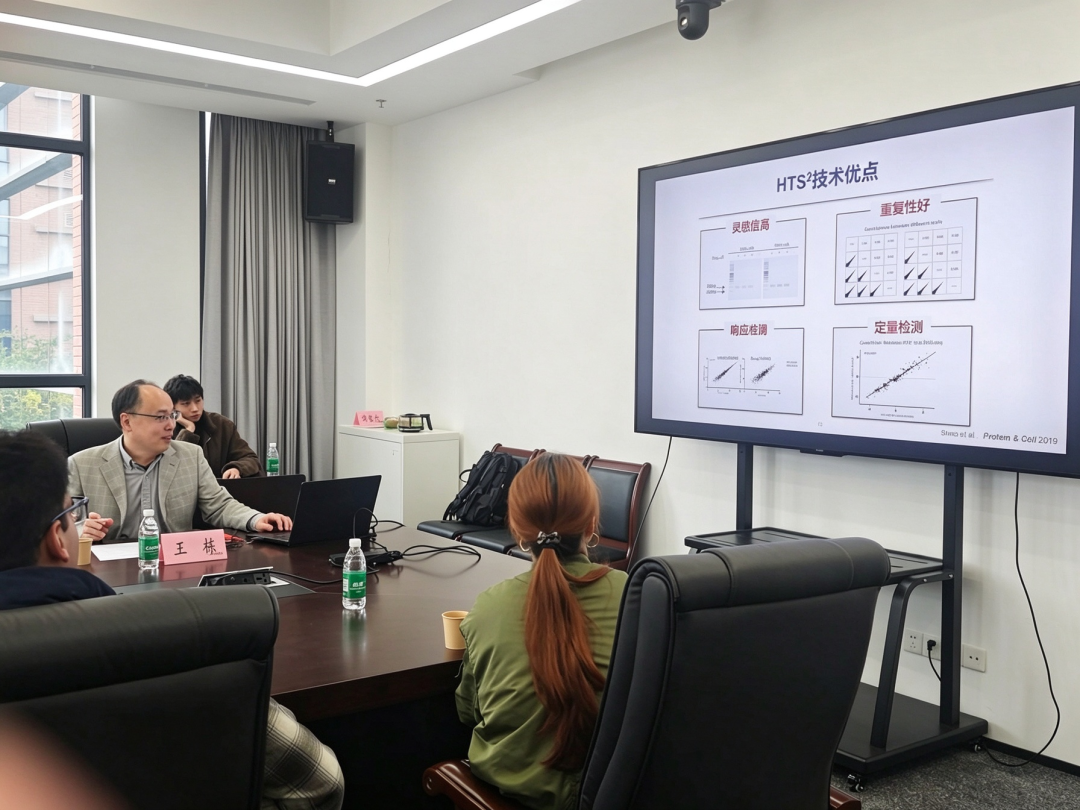
Introduction to the speaker
Wang Dong, Academic deputy dean, second-level professor, and doctoral supervisor of the School of Basic Medicine of Chengdu University of Traditional Chinese Medicine, chair professor of Chengdu University of Traditional Chinese Medicine, chief scientist of the National Key R&D Program Project, and scholar of the “Thousand Talents Plan” for high-level introduction of talents in Sichuan Province. He has long been focusing on molecular oncology of traditional Chinese medicine, mainly focusing on the molecular mechanisms and drug intervention of tumor metastasis and deterioration. Relevant work has been published as the first author or corresponding author in internationally renowned journals such as Nature, Nature Methods, Nature Structural & Molecular Biology, and 2 of them have been selected into the top 1% of the world's most cited papers. 。
core points
This time The report starts from "cell characteristic fingerprints" and points out that the differences between cells and diseases are due to differences in gene expression profiles. It relies on connectomics (CMap) to compare disease profiles and drug perturbation profiles to screen candidate drugs. In view of the shortcomings of low throughput and high cost of traditional transcriptome, HiMAP-seq targeted RNA sequencing technology is introduced: it does not require nucleic acid extraction and reverse transcription. The automated platform can achieve high-throughput sample detection, the data quality is comparable to conventional RNA-seq, and the cost is significantly reduced. Based on this technology, the team built an open CIGS database that collects perturbation data of tens of thousands of compounds. It has made progress in new uses of old drugs and target discovery, and verified active molecules such as 24-6BS and ligustrin. ; At the same time, large-scale gene knockdown is completed and the whole genome regulatory network is constructed. Compared with single-cell sequencing, this technology accounts for a higher proportion of effective data and more stable results, and can provide high-quality data support for virtual cell modeling and cross-cell line prediction. 。
Topic 2: New mechanism of ligand and receptor regulation of WNT signaling and its role in diseases
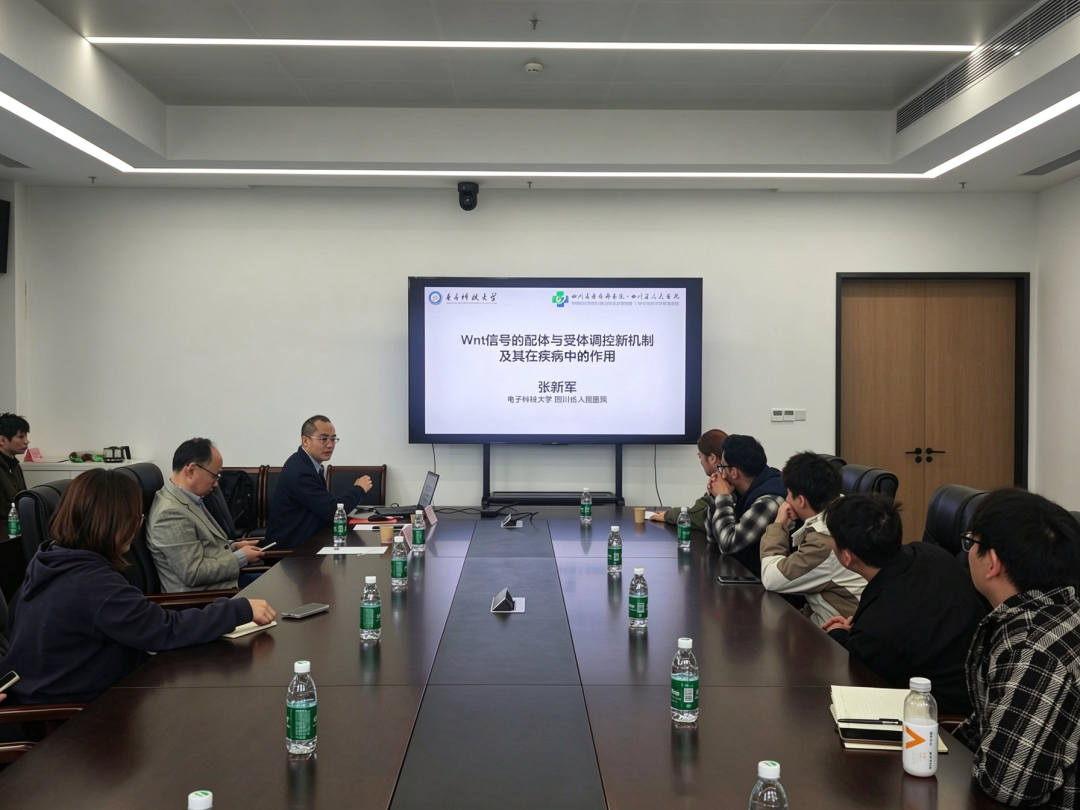
Introduction to the speaker
Zhang Xinjun, Professor and doctoral supervisor at the School of Medicine, University of Electronic Science and Technology of China, Genetic Center of Sichuan Academy of Medical Sciences and Sichuan Provincial People's Hospital, a national-level young talent, and a leading talent in Sichuan Province. Mainly engaged in research on the regulatory mechanism of Wnt signaling pathway and intracellular vesicle transport, committed to revealing new mechanisms of cell signal regulation and its role in development, disease occurrence and translational medicine. Relevant results have been published as the first author or corresponding author in academic journals such as Cell, Developmental Cell, and Autophagy. 。
core points
This time The report focuses on the new mechanism of regulation of Wnt signaling ligands and receptors. The team identified a new metalloprotease Tiki2 through cDNA library screening. It is a GPI-anchored protein that can hydrolyze Wnt ligands in cooperation with Frizzled receptors, revealing a new processing and inactivation regulatory pathway of Wnt signaling at the ligand level. Tiki2 is highly expressed in articular cartilage, and its expression is down-regulated in osteoarthritis. Animal experiments have confirmed that supplementing Tiki2 can inhibit Wnt overactivation and delay cartilage degeneration. The report also explains the receptor-side feedback regulation mechanism: Wnt can trigger ZNRF3/RNF43-mediated endocytic degradation of FZD5/8, which is not dependent on DVL, and RSPO can antagonize the interaction between RNF43 and FZD5. Research ranges from ligand processing, receptor homeostasis regulation to disease phenotypes, and systematically depicts the multi-level homeostasis regulatory network of Wnt signaling 。
This issue From technological breakthroughs in high-throughput target mining, analysis of new mechanisms of Wnt signal regulation to verification of disease intervention targets, the salon echoed the two lines and shared key scientific issues at the forefront of drug target discovery driven by new technologies and new mechanisms, bringing multiple inspirations to the scientific researchers present in the directions of high-throughput perturbation of the transcriptome, Wnt signal homeostasis regulation, and AI for Science empowered drug development. Participants said that the salon closely follows the cutting-edge, effectively opens up the research link between technology and mechanism, and lays a good foundation for subsequent interdisciplinary cooperation and translational research. 。


Number
023-68059937
Email:Jinfeng@jflab.ac.cn
Address:
No.313, Bella Road Chongqing High-tech Zone
Postal code: 401329

 渝公网安备50009802002274