
Lecture time
October 14 (Wednesday) 09:00-12:00Lecture location
Conference Room 311, Building 1, Jinfeng Laboratory
Lecture Topic 1: Towards Precision Diagnosis and Treatment of Cancer in 2030: AI+X multi-dimensionally empowers new thinking in tumor pathology
Introduction to the speaker
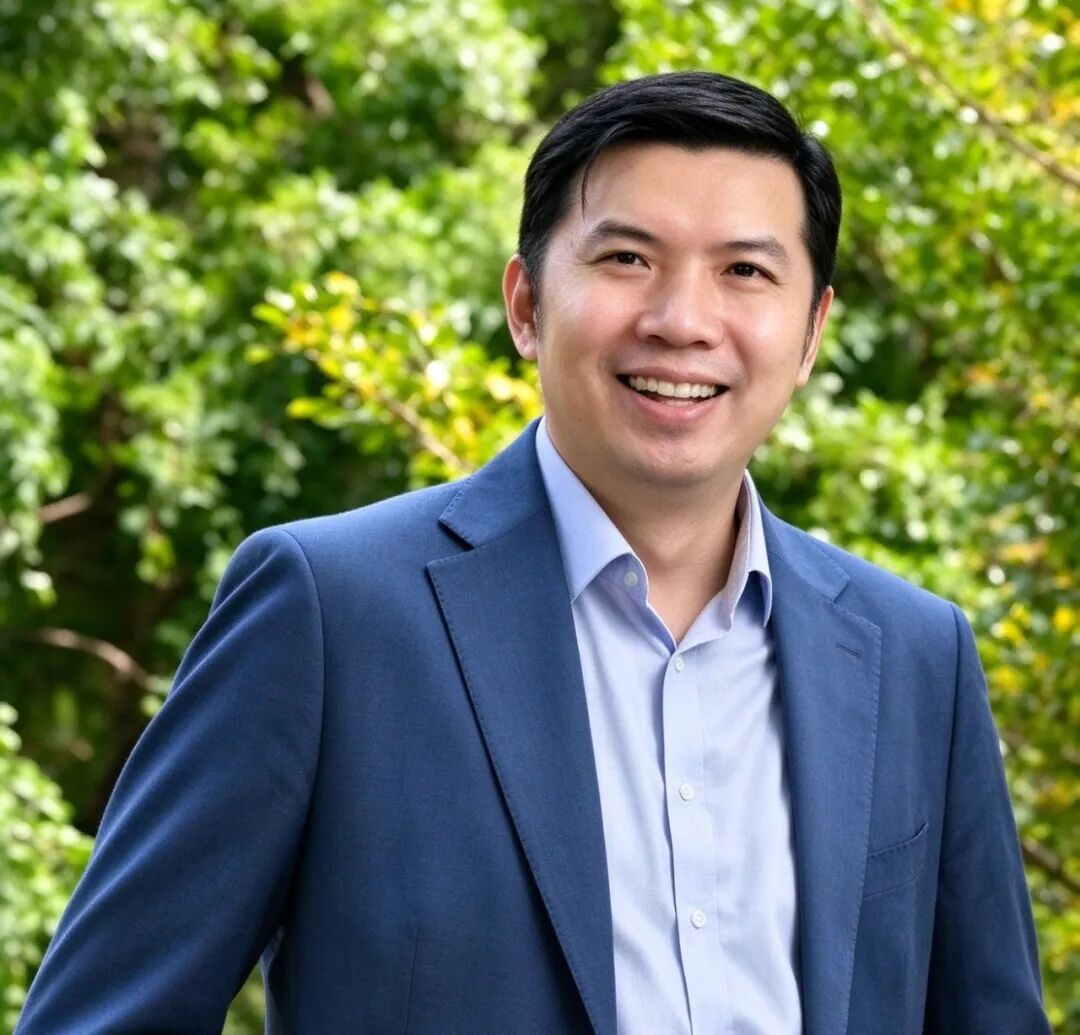
Yang Baocheng, He is a national-level talent from the Ministry of Education of China and a national-level talent from the Ministry of Health of Singapore. He is currently the Director of Immunopathology at Singapore General Hospital, and the project leader and chief scientist of the Singapore A*STAR Institute of Molecular and Cell Biology. A pioneer in the field of international spatial omics, he has published more than 150 academic papers and has been invited to give special lectures at more than 100 international conferences. Concurrently holds core academic positions in many top international tumor immunology societies such as SITC, WIC, ASCO, ESMO, etc. 。
Lecture Introduction
Currently, precision diagnosis and treatment of tumors is undergoing a paradigm shift from morphological description to spatial molecular phenotype analysis. Professor Yang Baocheng developed the TIMES scoring system, which improved the accuracy of liver cancer recurrence risk prediction to 82.2% by quantifying the spatial distribution of immune cells in the tumor microenvironment. The performance was significantly better than traditional TNM staging. The results were featured on the cover of Nature, confirming that spatial immune information is a new key dimension for precise diagnosis and treatment. Relying on the virtual multiplex immunofluorescence technology (GigaTIME framework) of conventional H&E sections, morphology-protein mapping can be learned from approximately 40 million cells, and virtual mIF images can be generated in large cohorts to achieve systematic analysis of the tumor immune microenvironment. In this lecture, Professor Yang Baocheng will systematically explain how AI +
Lecture topic 2: Using artificial intelligence to connect medical imaging and multi-omics to promote precision medicine
Introduction to the speaker

Xing Xiaohan, Dual assistant professor at the Department of Diagnostic Radiology and Department of Electronic Engineering at the National University of Singapore, PhD at the Chinese University of Hong Kong, and postdoctoral fellow at Stanford University in the United States. He has been deeply involved in the field of medical artificial intelligence for a long time, focusing on medical imaging analysis, multi-modal learning and precision medicine. He focuses on the fusion modeling of medical imaging, digital pathology, genomics and other multi-source medical data, and is committed to relying on AI technology to empower accurate disease diagnosis, prognosis assessment and clinical treatment decision-making. He has made fruitful scientific research achievements and has published many papers in top international journals and conferences such as Proceedings of the IEEE, IEEE TMI, Medical Image Analysis, CVPR, ICCV, and MICCAI, and won many important academic honors such as the MICCAI Young Scientist Award and the ASTRO Best Physics Award.
speak seat slip between
It is difficult to effectively integrate multi-source and heterogeneous clinical data, which is the core bottleneck for current precision medicine to analyze complex disease mechanisms and carry out precise diagnosis and treatment. With the iterative upgrade of medical imaging, multi-omics and artificial intelligence technology, how to rely on AI to achieve cross-modal information fusion and intelligent reasoning has become a research focus in the medical field. This lecture, with the theme of "From Multimodal Learning to Disease Understanding", shares cutting-edge research results in medical AI. Focus on the multi-source medical data fusion modeling method and cross-modal knowledge transfer technology in the scenario of missing modalities. ; Combining basic models and multi-modal agents to promote medical AI to achieve intelligent reasoning and generalization ; Through cross-modal generation technology, innovative applications such as pathological virtual staining and spatial transcriptome prediction are realized. The report will demonstrate technological innovation across the entire chain of medical AI, providing new technical support for accurate classification of complex diseases, prognosis assessment, and clinical implementation of precision medicine.
Everyone is welcome to actively participate


Number
023-68059937
Email:Jinfeng@jflab.ac.cn
Address:
No.313, Bella Road Chongqing High-tech Zone
Postal code: 401329

 渝公网安备50009802002274