
Recently, Jinfeng Stem Cell Academic Lecture The third issue Held successfully. This time The lecture focused on "Stem Cell Treatment of Myocardial Infarction" and "Progress in the Clinical Application of Stem Cells". Professor Maria Dorobantu, an academician of the European Academy of Sciences and a Romanian cardiovascular physician, and Professor Liu Guoqing of the University of South Florida were invited as guest speakers. Laboratory PI Professor Wang Guixue chaired the meeting , scientific researchers actively participated, and the academic atmosphere was warm.
Lecture 1: The treatment of myocardial Infarction with stem cells: Review of the literature and our experience in the field
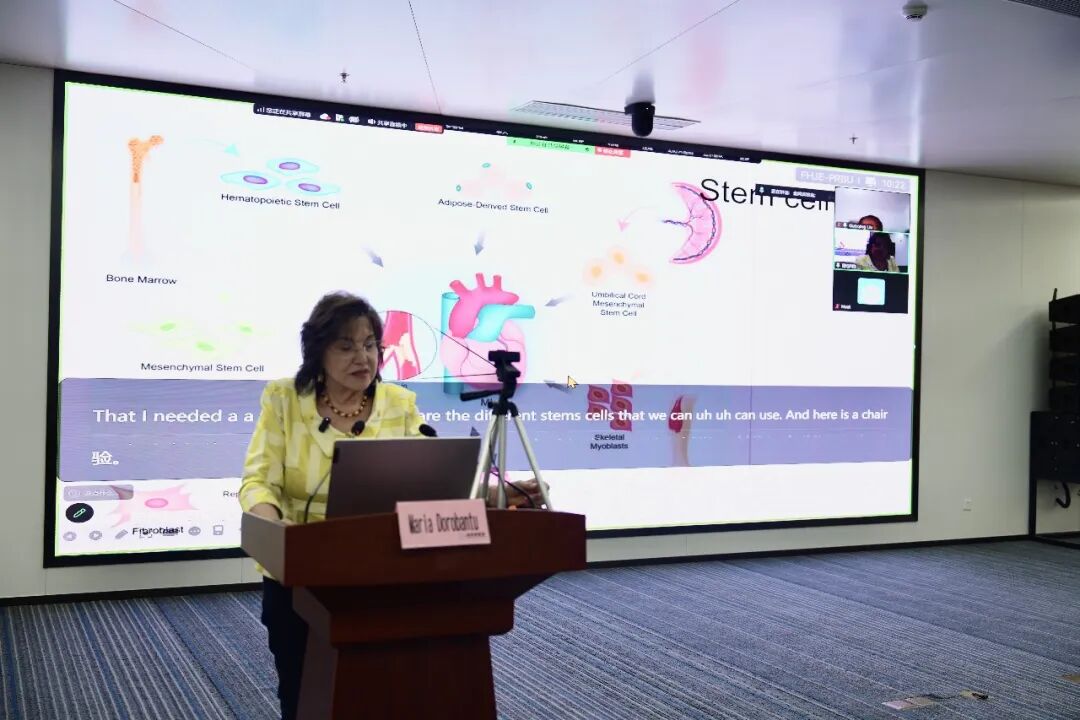
Introduction to the speaker
Maria Dorobantu , Fellow of the European Society of Cardiology (FESC), Fellow of the American College of Cardiology (FACC). Emeritus professor at the "Carol Davila" University of Medicine and Pharmacy in Romania, expert in cardiology and internal medicine. He is a corresponding member of the Romanian Academy of Sciences, an academician of the Romanian Academy of Medical Sciences, a foreign corresponding member of the French National Academy of Medical Sciences, and an academician of the European Academy of Sciences. He served as a visiting professor in the Department of Cardiovascular Diseases at Northwestern University Feinberg School of Medicine in the United States and received an honorary doctorate from Vasily Gordish University of the West in Romania.
Key points of the lecture
Professor Maria Dorobantu mentioned The team focuses on myocardial regeneration and cardiac function repair after myocardial infarction, and conducts research on the treatment of acute ST-segment elevation myocardial infarction (STEMI) with bone marrow mononuclear cells and umbilical cord mesenchymal stem cells. Relevant studies have shown that bone marrow mononuclear cells have the ability to proliferate and repair myocardium. A clinical study focused on 12 STEMI patients with left ventricular ejection fraction <40% after PCI. Autologous bone marrow mononuclear cells were infused through the coronary artery about 10 days after myocardial infarction. The results showed that this therapy could slightly improve the left ventricular ejection fraction without any new risk of death or arrhythmia, but the overall efficacy was limited. After comparing various cell preparations, it was found that umbilical cord mesenchymal stem cells have outstanding clinical application potential due to their low immunogenicity and strong repair activity. However, follow-up trials confirmed that its efficacy is similar to that of bone marrow mononuclear cells, and it can only slightly and unstablely improve left ventricular ejection fraction, without substantial benefit on key clinical endpoints such as all-cause mortality and heart failure hospitalization rate. Professor Maria Dorobantu pointed out that stem cell treatment for myocardial infarction has good development prospects, and large-scale clinical trials are still needed to determine the best cell types and standardized treatment options to promote clinical translation and application.
speak Seat two: Research progress on clinical application of stem cells
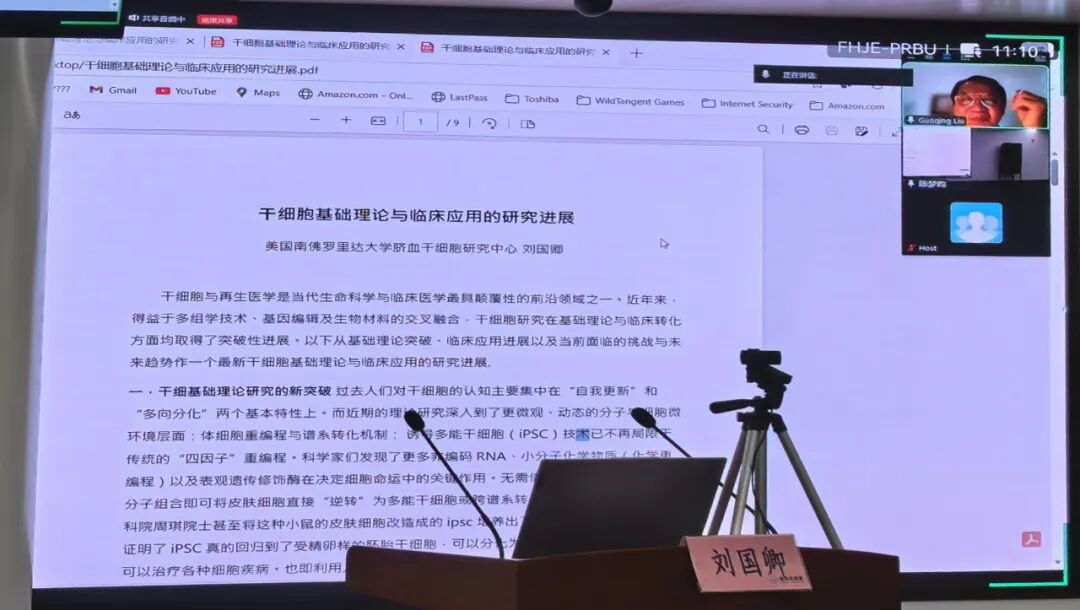
Introduction to the speaker
Liu Guoqing , postdoctoral fellow at University of South Florida, USA; Director, University of South Florida Cord Blood Stem Cell Bank ; Member of the American Association of Blood Banks (AABB) ; Member of the European Society of Hematology ; Member of the American Society of Hematology ; Member of the New York Society of Scientists ; Member of the American College of Allergy and Immunology. He has been engaged in stem cell scientific research for 36 years and managed stem cell banks for 30 years.
Key points of the lecture
In this lecture, Professor Liu systematically reviewed the cutting-edge progress, existing challenges and technological innovations in the field of stem cells. At the basic research level, stem cell theoretical research has deepened from traditional cognition to the microscopic and dynamic molecular mechanism and cellular microenvironment research dimensions, and the basic research system has become more refined. In terms of clinical translation, stem cell therapy has broken through the previous single scope of hematopoietic stem cell transplantation and entered a new stage of precision cell therapy for multiple systems and diseases. It has now shown good application effects in multiple diseases such as neurological diseases, autoimmune diseases, cardiovascular diseases, and metabolic diseases. At the same time, Professor Liu also objectively analyzed the bottleneck of industry development. He pointed out that the clinical application of stem cells has broad prospects, but from laboratory research to large-scale clinical implementation, core problems such as safety assurance, quality control, and application ethics still need to be overcome. In addition, the lecture also introduced the latest research and development progress of stem cell drug delivery methods. Stem cell delivery methods have broken away from the traditional extensive mode of systemic drug delivery and conventional injection, and have gradually upgraded to a new precision drug delivery mode of precise microenvironment colonization and intelligent biological carrier delivery, which has provided important technical support for improving the efficacy of stem cell therapy.
This lecture reviews the progress and existing problems in stem cell therapy for myocardial infarction and overall stem cell research transformation, systematically displays the clinical data of multiple types of stem cells in myocardial infarction repair, clarifies the iteration direction of drug delivery technology, and provides theoretical reference for subsequent clinical research on cell therapy. 。


Number
023-68059937
Email:Jinfeng@jflab.ac.cn
Address:
No.313, Bella Road Chongqing High-tech Zone
Postal code: 401329

 渝公网安备50009802002274